English| EUR
Suggested for you
More currencies
Choose a language
The sand starts roughly 360 kilometres southeast of the Koutoubia, on the far side of the High Atlas. Between the two sits one mountain pass, several river valleys and a driving day that rewards an early start. This how to get to sahara desert from marrakech guide sets out the routes, the timings and the conditions that shape them.
Quick answer
The overland route runs south from Marrakech over the Tizi n'Tichka pass through Ouarzazate and the Draa Valley to Zagora, Draa-Tafilalet, Morocco — a full day behind the wheel. The desert itself is open 00:00–23:59 daily and costs 0 MAD to enter, as these are public lands. Aim to arrive between 06:00 and 18:00; night driving on mountain roads is genuinely hazardous.
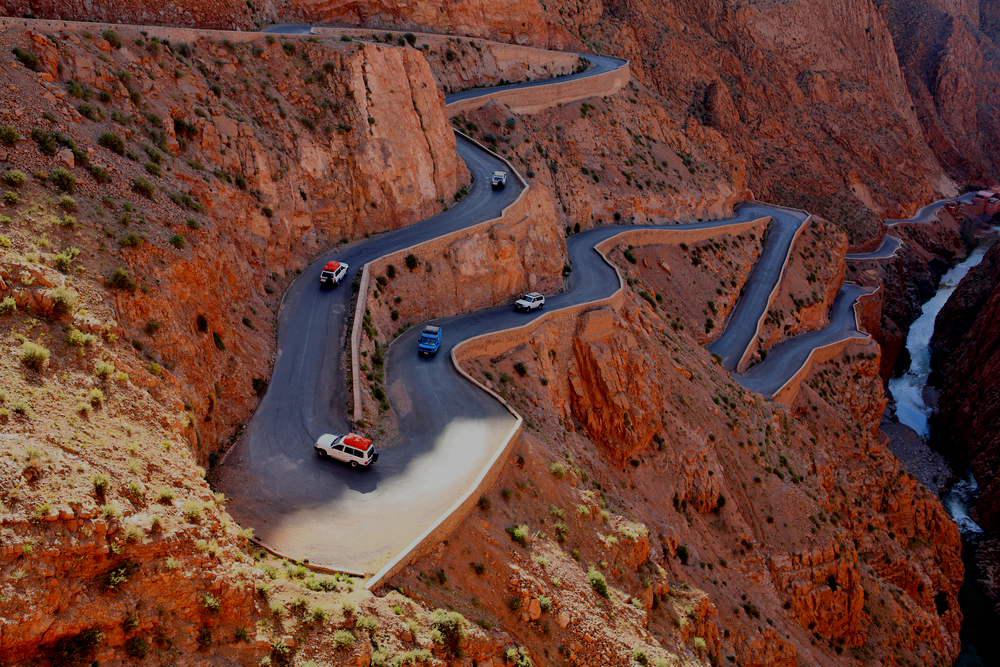
Zagora's most photographed object is not a dune but a road sign. Painted on a wall at the town's southern edge, it reads "Tombouctou 52 jours" — Timbuktu, fifty-two days by camel. That marker is the honest measure of where this journey ends: not at a monument with a turnstile, but at the head of an old caravan corridor that once carried salt, gold and manuscripts across the Sahara. Anyone researching how to get to sahara desert from marrakech is really planning a mountain crossing followed by a valley run. The Tizi n'Tichka pass climbs past 2,200 metres through the High Atlas, its switchbacks slow and its shoulders narrow, before dropping toward Ouarzazate and the film studios that made the town's name. From there the road follows the Draa Valley, a ribbon of palmeraie and kasbah walls running southeast past Agdz toward Zagora and the Erg Chegaga dunes beyond. The distances look modest on a map. The gradients, the roadworks and the livestock do not appear on maps at all, which is why locals measure the trip in hours rather than kilometres. A Marrakech to Zagora desert tour absorbs that arithmetic on the traveller's behalf; independent drivers must do it themselves. The practical consequence is that departure time matters more than route choice. Daylight is the operative constraint on the Atlas descent, where unlit bends and unfenced drops turn ordinary fatigue into risk. Summer adds a second variable: August afternoons in the Draa Valley regularly push past 40°C, and vehicles without functioning air conditioning suffer as much as their passengers. Most travellers leave Marrakech early, break at Aït Benhaddou or Ouarzazate, and reach the dunes with light to spare for the camel trek out to camp. The reassuring part is what happens on arrival. There is no gate, no ticket window and no queue at the Sahara. The desert regions around Zagora are public land, freely accessible, open around the clock. What costs money is transport, guiding and accommodation — the camel handlers, the drivers, the bivouac camps. Understanding how to get to sahara desert from marrakech is therefore mostly an exercise in logistics rather than admissions: settle the vehicle, settle the timing, and the destination looks after itself. Full timetables, seasonal notes and a departure checklist follow in the sections below.
“There is no gate, no ticket window and no queue at the Sahara — only a road, a pass, and the daylight left to cross them.”
The Zagora Desert is situated in the Draa-Tafilalet region, approximately 360 kilometers southeast of Marrakech. The most practical approach for reaching this destination involves traveling via private vehicle or professional transfer to navigate the mountain passes of the High Atlas.
Route N9 through the Tizi n'Tichka pass to Zagora
Supratours or CTM from Marrakech to Zagora
Grand Taxi from Marrakech to Zagora
For optimal safety and visibility, plan your journey within the best arrival window of 06:00–18:00. This avoids the hazards associated with navigating mountain roads and desert terrain after dark.
The best arrival window for Zagora is between 06:00 and 18:00 to prioritize visibility for desert landscapes and avoid hazardous night driving conditions. Planning your trip during the shoulder seasons offers a balance of manageable temperatures and safer travel conditions.
Warm, 20°C–30°C
Mild temperatures support outdoor travel and clear driving conditions.
Warm, 20°C–28°C
Stable weather patterns facilitate easier navigation through desert routes.
Very hot, 35°C–45°C
Extreme heat requires strict adherence to daylight travel limitations.
Cool, 10°C–20°C
Daytime is comfortable, though nights are cold and require adequate preparation.
Verdict: For the most stable conditions, plan your arrival between 06:00 and 18:00 during the months of April or October.
The Zagora Desert consists of public lands, meaning there are no official entrance fees for visitors entering the region. Costs associated with travel to this area are entirely separate from any site access.
Verdict: A typical visitor pays 0 MAD for entry, as desert regions are public lands accessible to all.
The Zagora Desert consists of public lands, providing 24/7 access to the region. Travelers should plan their arrivals within daylight hours for optimal visibility.
The drive from Marrakech to Zagora crosses the High Atlas and ends in open desert, so a few preparations weeks out will matter more than anything you can buy on the road.
Everything you need to know about how to get to sahara desert from marrakech
For travelers with tight schedules, a 2-day excursion to the Zagora desert is the most common way how to get to sahara desert from marrakech. This route focuses on the Draa Valley and provides a desert experience without the longer travel times required for more distant dunes.
Hiring a private vehicle or joining a pre-arranged tour is widely considered the most reliable method for how to get to sahara desert from marrakech. These options manage complex logistics like the Tizi n'Tichka mountain pass, ensuring a safer and more comfortable arrival.
Yes, you can drive to the Zagora region independently as the routes are accessible via public roads. However, most travelers choose guided transport to navigate the mountain passes and desert terrain more efficiently when learning how to get to sahara desert from marrakech.
The journey typically takes 6 to 7 hours by car, winding through the High Atlas Mountains. Planning for this duration is essential for those researching how to get to sahara desert from marrakech and scheduling departure times.
There is no entrance fee for the desert itself, as these regions are public lands accessible to all. You will not face individual admission charges when visiting the open desert dunes.
Families can absolutely enjoy these trips, provided they prepare for the winding mountain roads and heat. Choosing a reputable tour allows for planned stops at iconic landmarks, making the travel experience smoother for all ages.