72 hr
3-Day Merzouga Desert Adventure from Marrakech
Journey through Atlas peaks, ancient kasbahs, and golden dunes with camelback sunsets and Berber camps
Reserve
Hand-picked by our editors — only the best 5 desert crossings from 5 reviewed.
Verified partners for every tour, free cancellation where available, and instant confirmation on every booking.
72 hr
Journey through Atlas peaks, ancient kasbahs, and golden dunes with camelback sunsets and Berber camps
Reserve
72 hr
Journey across the Atlas Mountains to sleep under desert stars, ride camels at sunset, and visit ancient kasbahs
Reserve
72 hr
Journey through Atlas peaks to the Sahara dunes with camel rides, Berber camp stays, and UNESCO sites
ReservePrices from verified partners. Availability updates in real time at checkout. Free cancellation policies apply where shown.
The landmarks, rooms, and views travelers on this tour remember — all visible on a single visit.
Lush palm groves that sustain life in the arid landscape. The valley supports 500,000 date palms.
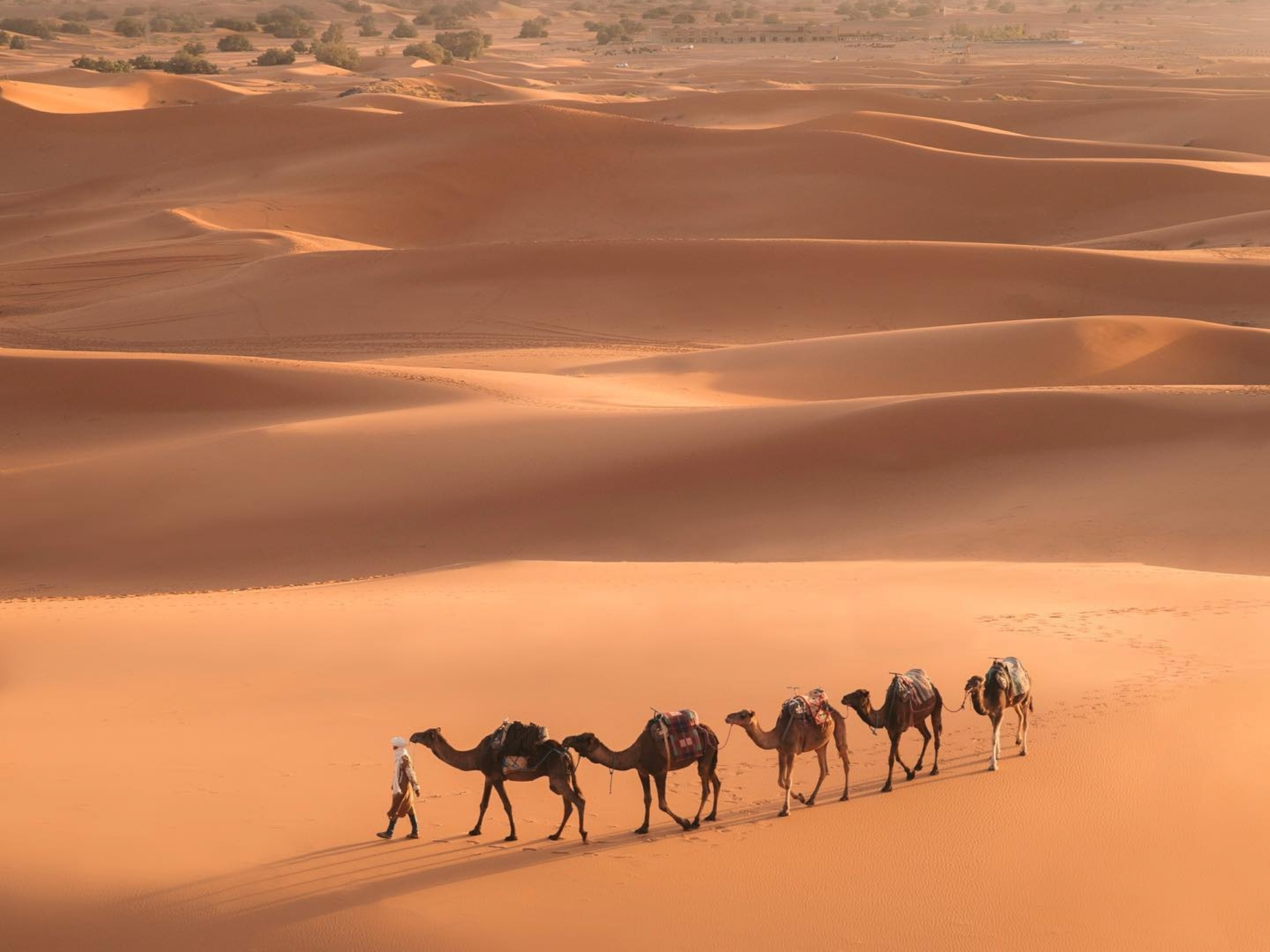
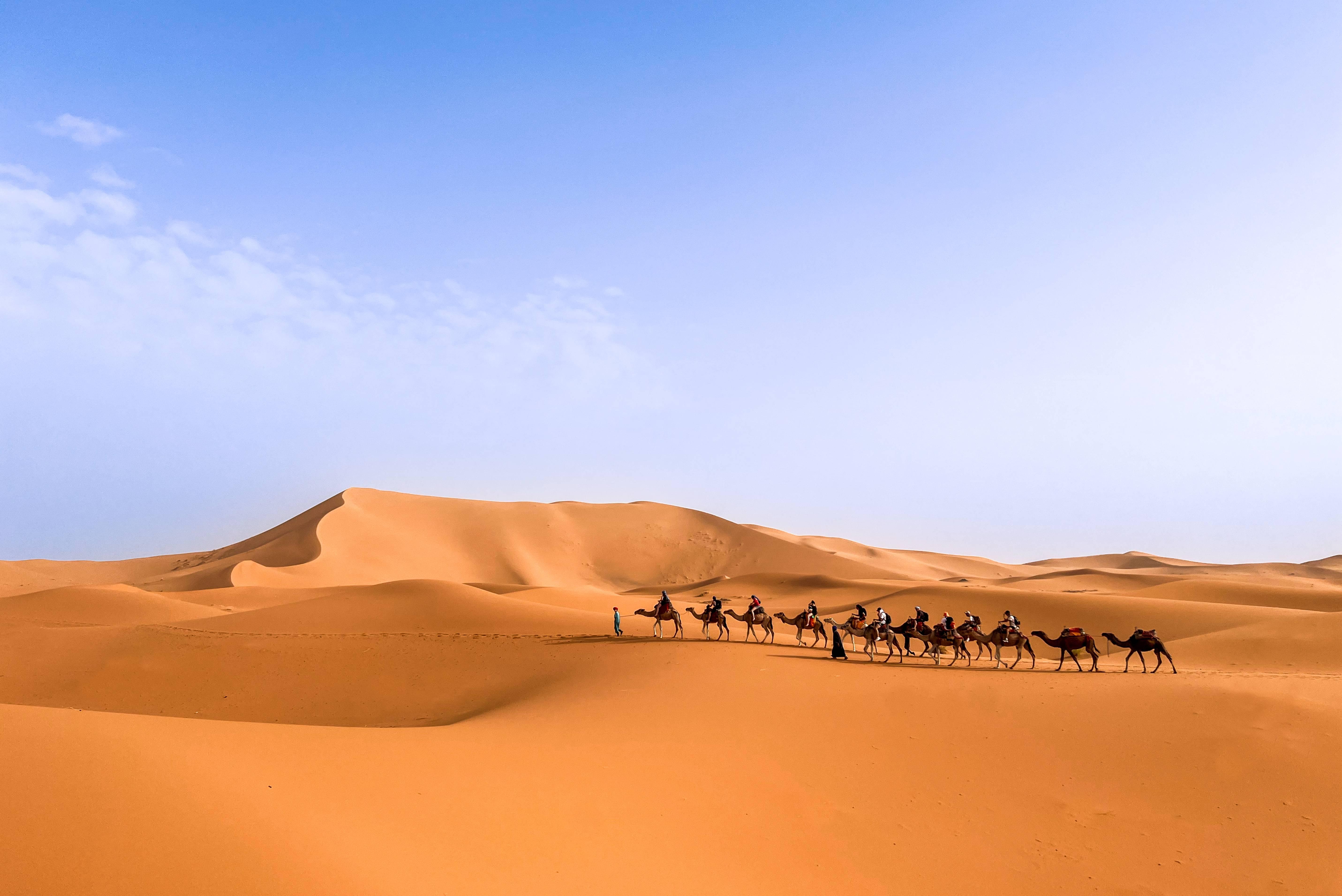
Shifting peaks that reach heights of over 100 meters in some regions. These dunes constantly change shape due to wind.
Traditional living space featuring hand-woven textiles and communal dining. These camps house travelers overnight.
Historic fortified homes made of mud-brick and clay architecture. These structures define the regional desert style.
Atmosphere free of light pollution allows for visibility of the Milky Way. This is a primary feature for evening tours.
The Zagora desert provides a more accessible, faster gateway into the sands, whereas the Merzouga desert offers the iconic, expansive high dunes that define the traditional Sahara landscape. These experiences represent distinct regional choices, and travelers often select the from marrakech 3 day 2 night sahara desert tour to fes tour for its efficiency, while preferring Merzouga for immersive erg scenery.
| Feature | Top pick Zagora Desert | Merzouga Desert |
|---|---|---|
Travel Time from Marrakech |
~7 hours | ~10-12 hours |
Landscape Type |
Reg (rocky desert) | Erg (sand dunes) |
Dune Height |
Low dunes | High dunes (up to 500ft) |
Best for Short Stays |
Yes | No |
Atmosphere |
Desert outskirts feel | Deep desert isolation |
Entrance fee |
0 MAD | 0 MAD |
| See tickets → |
Verdict: If your priority is minimizing time spent in transit while still experiencing a camel trek, the from marrakech 3 day 2 night sahara desert tour to fes provides a practical solution, while those seeking expansive, towering golden sands should opt for Merzouga desert tours.
Choose your ticket, select your date, and reserve in under two minutes. Secure checkout handled by our verified partner.
Instant confirmation by email, with a mobile voucher you can save offline. No printing, no queuing at a collection desk.
Arrive at the entrance, show your voucher on your phone, and walk in. Most tickets include priority or skip-the-line access.
Practical details for your visit straight from our verified partners — hours, access, rules, and how to get there.
Zagora, Morocco
Main staging point for group departures
Rental 4x4 vehicles are required for accessing remote desert camps. Public transport is available to Zagora town, but not the dunes
Most visitors book an organized tour with pre-arranged 4x4 transport
Wear loose, breathable clothing to protect skin from sun exposure and sand. Comfortable closed-toe walking shoes or boots are recommended for trekking.
Travel light with a soft-sided daypack suitable for camel transport. Security is managed by your guide and tour operator throughout the journey.
The best lighting occurs between 06:00 and 18:00 for capturing the golden hues of the dunes. Ensure you protect camera equipment from fine sand particles.
The Zagora Desert consists of natural sand dunes and rocky plateaus which are not wheelchair accessible. Consult your tour operator regarding specific mobility assistance needs.
Mobile signal is limited or non-existent once you enter deep desert sections. Use phones primarily for offline photography and navigation.
Children are welcome on desert expeditions, though age restrictions may apply for long camel treks. Ensure infants are shielded from direct sunlight and heat.
Traditional Moroccan meals are provided by the desert camp. Carry at least 2 liters of water per person per day to maintain hydration.
Pets are generally not permitted on group tours due to camel interactions and camp logistics. Check individual operator policies before arrival.
Respect local desert culture by asking permission before taking portraits of locals. Follow the leave-no-trace principle to protect the environment.
Best time to go, insider tips, nearby landmarks, and the cancellation fine print — flip through to skim what matters to you.
How crowds, weather, and events shift across the year.
March to May brings pleasant temperatures and blooming vegetation in desert oases. This is a popular time for trekking and photography.
June to August features extreme heat during midday, making the 06:00–18:00 window essential. Night skies remain exceptionally clear for stargazing.
September to November offers cooling temperatures following the summer heat. Ideal conditions for desert trekking and cultural festivals.
December to February brings cold nights and mild days. Ensure you pack warm layers for the significant temperature drop after sunset.
Small details that turn a good visit into a great one.
Drink water consistently throughout the day even if you do not feel thirsty. Dry desert air causes rapid fluid loss.
Use a neck gaiter or scarf to cover your mouth and nose during windy conditions. This prevents sand inhalation.
Choose hiking sandals or lightweight boots that allow sand to be shaken out easily. Avoid heavy leather shoes.
Plan your most intensive photography between 06:00 and 18:00 to utilize soft light. Midday light often causes harsh shadows.
Cold desert nights drain battery life faster than expected. Store power banks and extra batteries inside your sleeping bag for warmth.
Non-bookable sights within a short walk — free to visit, easy to pair.
Small but accessible dune area perfect for short walks
Lush palm groves stretching along the desert river
Traditional market showcasing local handicrafts and spices
Flexible, no hidden fees.
Cancellations must be requested according to the specific operator terms linked in the product grid. All entries to the natural landscape remain free of charge at 0 MAD.
Hand-picked options within walking distance — pick a district for vibe, or a specific hotel for convenience.
Traditional tents with comfortable beds and private facilities
Traditional mud-brick architecture near the desert edge
Standard hotel options for pre and post-tour stay
The Zagora Desert sits at the end of a road sign that once read fifty-two days to Timbuktu by camel. That marker, painted on the southern edge of Zagora town, is not decoration. It records a caravan route that carried gold, salt and manuscripts north through the Drâa Valley for more than six centuries. Zagora Province lies below the High Atlas, reached by the Tizi n'Tichka pass at 2,260 metres. The Drâa is Morocco's longest river, running roughly 1,100 kilometres, though it disappears into sand long before the Atlantic. Along its upper course stand the ksour and kasbahs of packed earth and straw — Aït Benhaddou, a UNESCO World Heritage Site since 1987, is the best known. The Almoravids gathered forces here in the eleventh century before marching on Marrakech. The Saadian dynasty, which built the tombs behind Marrakech's Kasbah Mosque, traced its origin to the Drâa oases. A from marrakech 3 day 2 night sahara desert tour to fes retraces that corridor in reverse, running south through Ouarzazate and east toward the erg before turning north to the Middle Atlas. The desert here is largely hamada — stone plateau — punctuated by dune fields. Erg Chigaga and Erg Chebbi are the two great sand seas of southern Morocco, the latter rising near Merzouga to roughly 150 metres. Between them lie palmeries irrigated by khettara, underground channels dug by hand and maintained communally for generations. Nomadic Aït Atta families still move herds across this ground seasonally. Why it matters now is partly geological and partly cultural. The Drâa palm groves are among the largest in North Africa and are under measurable pressure from drought and Bayoud disease. The kasbah architecture, built in pisé, dissolves in heavy rain and requires constant re-rendering; several structures documented in the 1930s no longer stand. Meanwhile Gnawa music, Amazigh weaving and the tent-making crafts of the south remain living practices rather than museum pieces. Access is unrestricted. The landscape carries no gates and no ticket booth: entrance is 0 MAD, and the terrain is open at all hours, 00:00–23:59, every day of the week. Operators pairing marrakech to merzouga desert tour itineraries with a Fes arrival therefore sell logistics and guiding, not admission. Travellers comparing from marrakech 3 day 2 night sahara desert tour to fes tickets are buying transport across some 1,000 kilometres of road, two desert camp nights and a guide who knows which piste is passable after rain.
"A painted sign at the edge of Zagora still counts the distance to Timbuktu in days by camel."
A step-by-step walkthrough of the visit — what you'll see, how long each stage takes, and the details that matter.
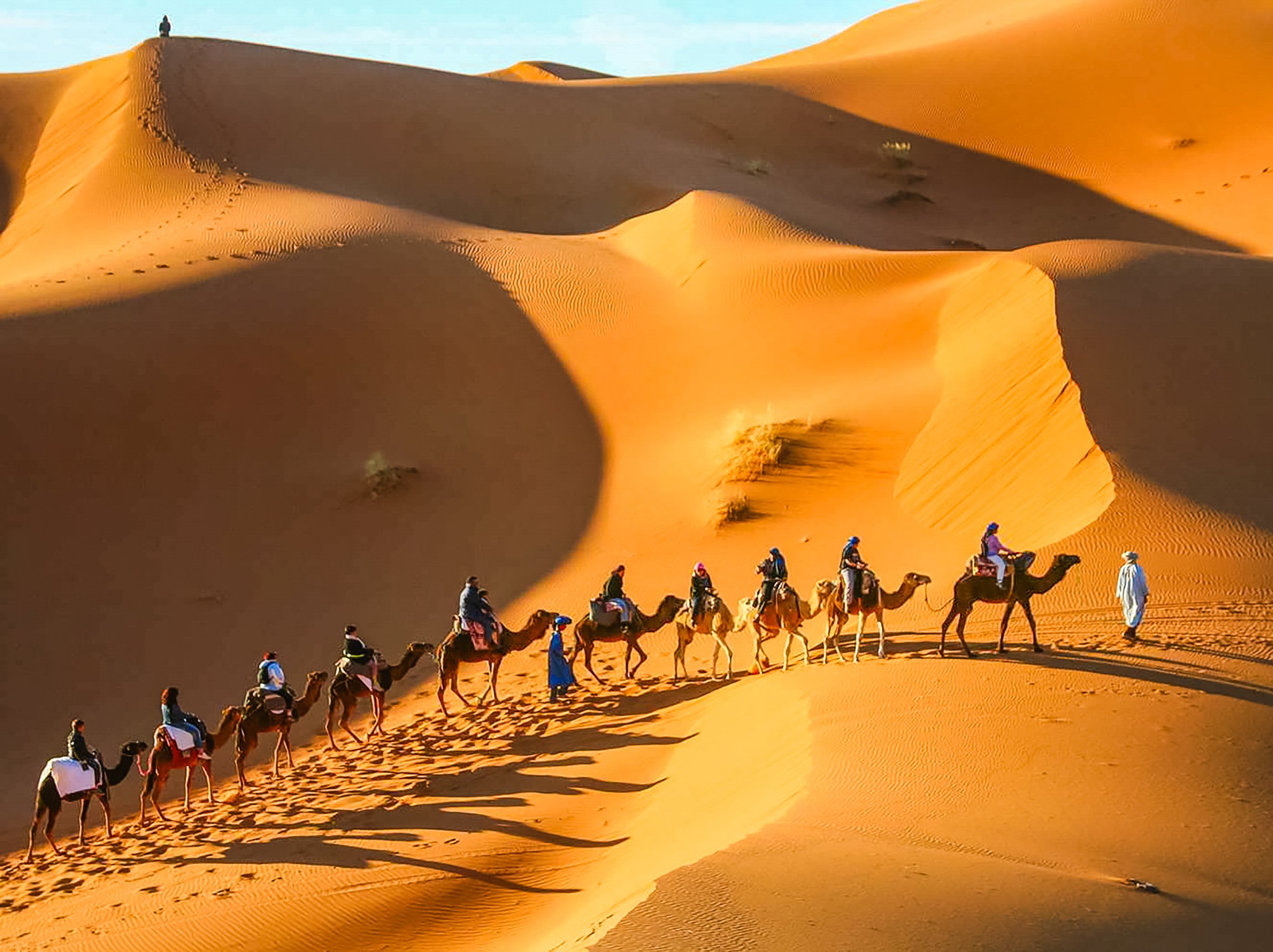
You leave Marrakech early, usually before 08:00, and climb the Tizi n'Tichka switchbacks with the Atlas opening behind you. By late morning you stop at Aït Benhaddou and walk up through the ksar's earthen lanes to the granary at the summit — about twenty minutes of steady ascent, longer if you stop for mint tea. Ouarzazate passes at lunch. The afternoon belongs to the Drâa Valley, palm groves running unbroken for kilometres beside the road. Day two is the long transfer east through Rissani and Erfoud. You arrive at the dune edge in the golden hour, swap the minibus for a camel, and ride roughly forty-five minutes into the erg. Dinner is tagine by lamplight; drums start after. You sleep in a Berber tent, two nights of it across the trip, and you wake before sunrise because everyone does. The third day runs north through Ziz Gorge, Midelt and the cedar forests near Azrou where Barbary macaques sit on the roadside. You reach Fes by evening. Plan your movement between 06:00 and 18:00 — that window gives you workable light and spares you the worst midday heat. The desert itself charges nothing to enter; every from marrakech 3 day 2 night sahara desert tour to fes tour on this page prices the driving, the camp and the guiding instead.
The best arrival window for desert activities is 06:00–18:00 to avoid extreme heat. This is the optimal time for camel treks and photography.
Entry to the Zagora Desert is 0 MAD as it is an open natural landscape with no gates.
Yes, children are welcome on the from marrakech 3 day 2 night sahara desert tour to fes, provided they are fit for desert travel and camel riding.
Pack sunscreen, a wide-brimmed hat, sturdy shoes, and warm layers for the evening. Your bag should be soft-sided to fit on transport.
Mobile signal is limited in the desert, so use your phone primarily for offline photography. Battery management is essential.
The natural terrain of the Zagora Desert is not wheelchair accessible. Please consult your tour operator regarding specific needs.
The from marrakech 3 day 2 night sahara desert tour to fes lasts exactly three days and two nights. Check your specific itinerary for daily timing.
Traditional Moroccan meals are generally included in the cost of your from marrakech 3 day 2 night sahara desert tour to fes. Always verify with your operator.
While you can check for last-minute availability, booking in advance for the from marrakech 3 day 2 night sahara desert tour to fes is recommended.
Yes, you can bring photography equipment, but ensure it is protected from sand. The best light for your from marrakech 3 day 2 night sahara desert tour to fes occurs between 06:00–18:00.